
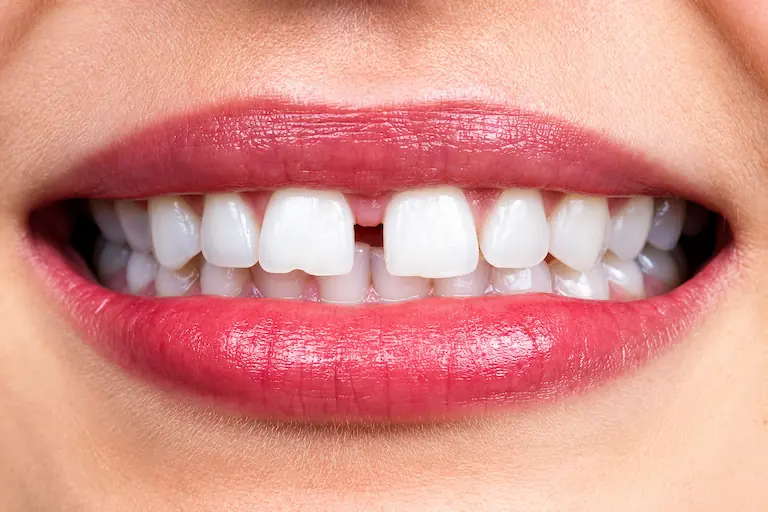
A gap between the front teeth, known clinically as a diastema, can be a natural characteristic of a smile. While some people consider it part of their individuality, others may prefer a more closely aligned appearance.
In suitable cases, veneers can be used to close a gap and create a more harmonious, well-proportioned smile. The restorations are planned according to the existing tooth dimensions, facial proportions, bite, and overall smile to achieve natural-looking proportions and a cohesive result.
This guide explains how veneers can be used to close gaps between teeth, when they may be appropriate, and what you can expect throughout the veneer treatment process.
What Are Veneers for Gap Teeth?
Veneers are thin, custom-made restorations bonded to the front surface of teeth. They are typically made from porcelain or composite resin.
When used to close a gap, veneers are designed to increase the visible width of the teeth on either side of the space while maintaining appropriate tooth proportions. The shape, contour, and emergence profile of each restoration are carefully considered so that the teeth appear naturally proportioned within the smile.
The treatment changes the visible form of the teeth rather than their underlying position.
When Can Veneers Be Used to Close a Gap?
Veneers may be considered when the gap is primarily an aesthetic concern and the teeth are otherwise suitable for restorative treatment.
They can be particularly useful when the patient also wants to address other aesthetic concerns, such as:
- Tooth shape or size
- Uneven tooth proportions
- Discolouration
- Minor chips or worn edges
- Overall smile aesthetics
However, not every gap is suitable for closure with veneers. The size and location of the gap, tooth dimensions, tooth position, bite, gum health, and underlying cause all need to be assessed before treatment is planned.
How Does the Veneer Process Work?
While every case is different, the veneer process at Blanc generally involves several stages.
1. Consultation and Smile Assessment
The process begins with a detailed assessment of your teeth, gums, bite, and smile. We evaluate the size and position of the gap, tooth proportions, facial features, and the overall relationship between the teeth and smile.
We also assess whether veneers alone can achieve the desired result or whether another treatment would be more appropriate.
2. Planning
Once veneers are considered appropriate, the desired tooth shape, size, proportions, colour, and overall appearance are planned.
A physical mock-up may be used to assess the proposed changes before the final treatment. This allows the shape and proportions of the planned veneers to be evaluated in relation to the overall smile.
3. Tooth Preparation
Where preparation is required, the teeth are carefully reshaped to create the necessary space for the veneers. The amount of preparation depends on factors such as tooth position, bite, the chosen material, and the desired result.
The aim is to preserve as much healthy natural tooth structure as clinically appropriate.
4. Custom Fabrication
Once the treatment plan is finalised, the case is transferred to our in-house dental laboratory.
Our ceramist and aesthetician work closely with the clinical team to develop the final restorations, considering factors such as tooth shape, proportions, colour, translucency, surface texture, and the overall aesthetic of the smile.
This close collaboration allows the veneers to be individually crafted according to the planned outcome rather than produced from a standard template.
5. Try-In, Bonding, and Final Adjustments
Once the veneers are ready, they are tried in to assess their fit, appearance, colour, and proportions before final bonding.
Once approved, the veneers are permanently bonded to the teeth. The bite and overall appearance are then checked, with any necessary adjustments made to ensure comfort and function.
What Results Can You Expect?
Veneers can close the appearance of a gap while also allowing other aesthetic characteristics of the teeth to be refined. Depending on the treatment plan, the result may include:
- Closure of the gap
- Improved tooth proportions
- More even tooth shapes
- Changes to tooth colour
- A more cohesive overall smile
The final appearance depends on factors including the original tooth dimensions, size and position of the gap, number of teeth being treated, and the planned design.
With appropriate care, porcelain veneers can last for many years. Their longevity depends on factors such as the material, bite, oral hygiene, tooth condition, and individual habits.
Why Choose Blanc for Veneers?
At Blanc, veneer treatment is approached as a combination of clinical planning, aesthetic judgement, and laboratory craftsmanship.
Our in-house dental laboratory allows the clinical and laboratory teams to work closely throughout the treatment process. The ceramist and aesthetician play an important role in translating the planned design into the final restorations, with careful attention to tooth shape, colour, translucency, texture, and proportions.
The aim is not simply to close the gap, but to create restorations that integrate naturally with the rest of the smile.
If you're considering veneers for gap teeth and want to understand whether they are appropriate for you, schedule a personalised consultation with Blanc to explore your options.
FREQUENTLY ASKED QUESTIONS