
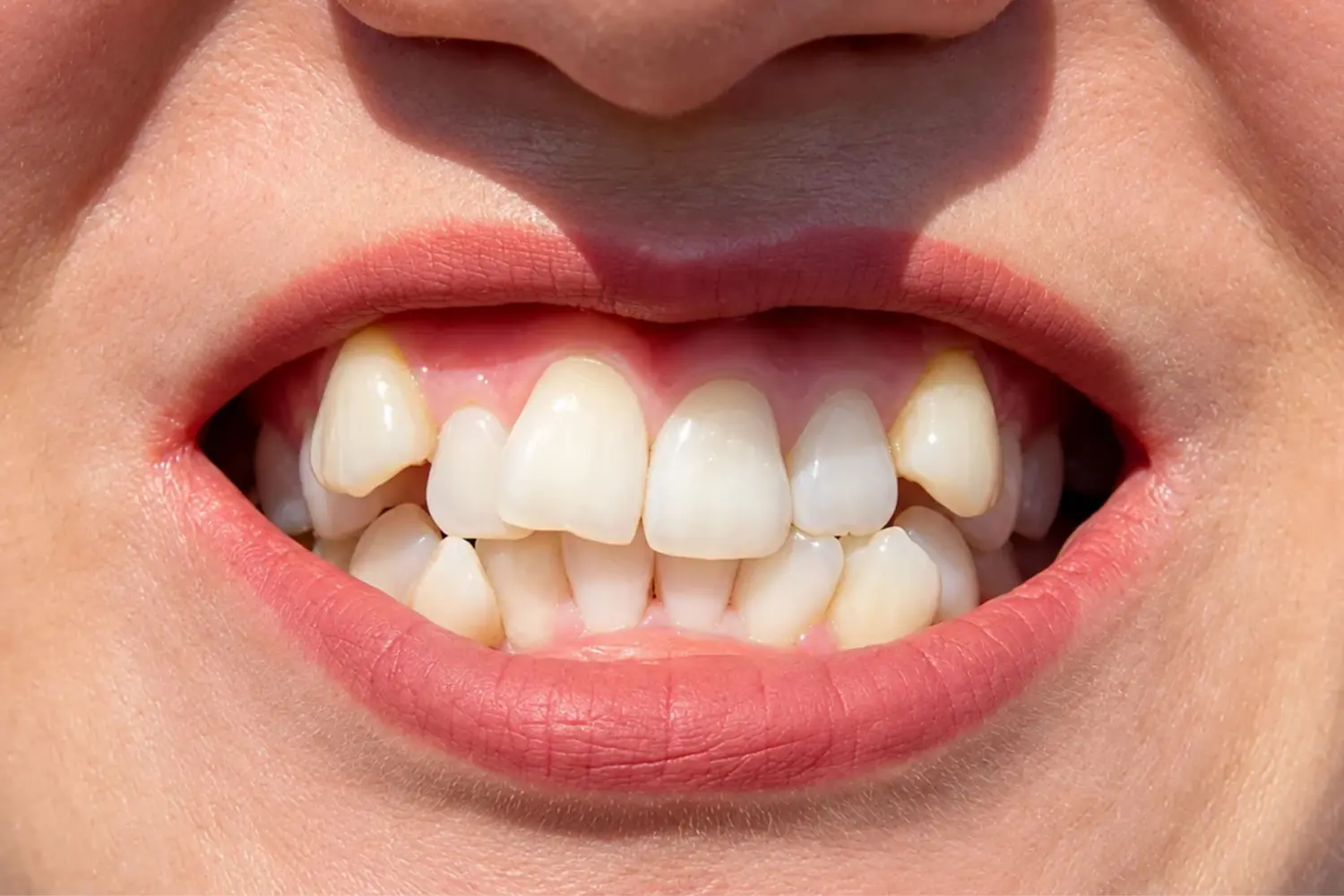
A crooked smile can make some people feel hesitant to smile freely in photos, meetings, or even everyday conversations. Braces and clear aligners are often the first solutions that come to mind, but they are not the only option. For patients with mild alignment concerns who also want to change the shape, colour, or proportions of their teeth, veneers may offer a cosmetic approach to creating a straighter-looking smile.
At Blanc, one of the questions we often hear is: can veneers really straighten your smile, or do they simply change its appearance? The answer depends on the degree of misalignment, the condition of your teeth, and what you want to achieve.
What Are Veneers, and How Do They Work?
Dental veneers are thin, custom-made restorations, typically crafted from porcelain or composite resin, that are bonded to the front surface of teeth.
Unlike orthodontic treatment, veneers do not reposition teeth. Instead, they change the visible shape, colour, contours, and proportions of the teeth. In carefully selected cases, this can create the appearance of a straighter and more even smile.
Veneers may therefore be considered for patients with mild crookedness, small gaps, uneven edges, or slight rotations, particularly when they also want to improve other aspects of their smile.
Can Veneers Actually Straighten Crooked Teeth?
Veneers do not physically straighten teeth. They can, however, create the appearance of a straighter smile by changing the visible surfaces of the teeth. For patients with mild alignment concerns, this may be enough to achieve the aesthetic change they are looking for.
Veneers are generally not suitable for severe crowding, significant rotations, substantial misalignment, or complex bite problems. In these situations, orthodontic treatment may be recommended to address the underlying alignment before considering cosmetic treatment.
The right approach therefore depends on the individual case. A clinical assessment is important to determine whether veneers can achieve the desired result or whether another treatment would be more appropriate.
Veneers as Part of a Complete Smile Makeover
For many patients, crooked teeth are only one part of what they would like to change about their smile. They may also want to address tooth colour, shape, length, uneven edges, or the overall proportions of their smile.
At Blanc, every smile is considered individually. Facial structure, lip line, natural tooth characteristics, smile dynamics, and personal preferences all play a role in determining the appropriate aesthetic direction.
The goal is not to create a standardised version of a “perfect” smile, but to create one that feels natural and appropriate to the individual.
Types of Dental Veneers to Consider
When considering dental veneers for a crooked appearance, there are several material options.
- Porcelain veneers – Highly durable and stain-resistant, with an appearance designed to closely replicate the light-reflecting qualities of natural enamel. They are commonly used for comprehensive aesthetic smile transformations.
- Composite veneers – A more accessible option that can often be completed with less laboratory involvement. Composite generally differs from porcelain in terms of durability, stain resistance, and long-term wear.
- Ultra-thin or minimal-preparation veneers – Designed to require little, and in selected cases no, enamel reduction. Whether this approach is appropriate depends on factors such as tooth position, available space, bite, and the desired aesthetic outcome.
The appropriate material depends on your teeth, bite, aesthetic goals, and the extent of the changes required. Your dentist can recommend the most suitable option following a detailed assessment.
What to Expect During the Veneer Process
While every case is different, the veneer process at Blanc typically involves several carefully planned stages.
1. Consultation and Smile Assessment
Your consultation begins with a detailed assessment of your teeth, gums, bite, facial proportions, and smile. We discuss your concerns, aesthetic goals, and the changes you would like to make.
We also assess whether veneers alone can achieve the desired result or whether a combination of treatments would be more appropriate.
2. Smile Designing and Mock-Up
Once veneers are considered appropriate, we plan the desired tooth shape, size, proportions, colour, and overall appearance of the smile.
A physical mock-up may be used to assess the proposed shape, size, and overall appearance of the veneers before the final treatment.
3. Tooth Preparation
The teeth are carefully prepared according to the treatment plan and the type of veneers being used. The amount of preparation varies from case to case and depends on factors such as tooth position, bite, material, and the desired aesthetic outcome.
4. Shade Selection and Laboratory Fabrication
Once the design is finalised, the case is transferred to our in-house dental laboratory, where our ceramist plays an important role in creating the final veneers.
The ceramist works closely with the clinical team to develop the shape, colour, surface texture, translucency, and other details of each restoration. This allows the veneers to be individually crafted to complement the patient's smile rather than produced from a standard template.
5. Temporary Veneers
Temporary veneers are placed to protect the prepared teeth while the final veneers are being made. They also help maintain the appearance and function of your smile during the treatment period.
6. Try-In, Bonding, and Final Adjustments
Once the final veneers are ready, they are tried in to assess their fit, appearance, colour, proportions, and relationship with the surrounding teeth.
Any necessary refinements are made before the veneers are permanently bonded. The final bite and overall appearance are also checked to ensure the restorations are comfortable and functional.
Are Veneers Right for You?
Veneers may be suitable for patients who:
- Have mild crookedness, rotation, or small gaps
- Want to improve the appearance of tooth shape or proportions
- Also want to address concerns about tooth colour or uneven edges
- Have healthy teeth and gums
- Are looking for a cosmetic approach to improving the appearance of their smile
Veneers are not the right solution for every type of misalignment. If the teeth require significant movement or there are underlying bite or oral health concerns, another treatment approach may be more appropriate.
A clinical examination is therefore essential before deciding whether veneers are suitable for your smile.
Why Choose Blanc for Your Smile Transformation?
At Blanc, cosmetic dentistry is approached as a thoughtful design process rather than a one-size-fits-all procedure.
Our clinical and laboratory teams work closely throughout the treatment journey. From the initial assessment and smile planning to the fabrication and final placement of your veneers, each stage is carefully considered.
With our in-house dental laboratory and dedicated ceramist, we can maintain close collaboration between the clinical and laboratory sides of treatment. This allows the final veneers to be crafted with attention to individual details such as shape, colour, texture, translucency, and proportions.
If you're considering veneers for crooked teeth and want to understand whether they are right for you, schedule a personalised consultation with Blanc to explore your options.
Final Thoughts
Veneers can be an effective cosmetic option for selected patients with mild alignment concerns, particularly when they also want to improve the shape, colour, or proportions of their teeth.
However, not every crooked smile can be treated with veneers. The most appropriate approach depends on the degree of misalignment, your bite, dental health, and the changes you want to achieve.
At Blanc, every case is assessed individually, with the aim of creating a smile that feels natural, refined, and personal to you.
If you're ready to explore your options, contact Blanc to begin your consultation.
FREQUENTLY ASKED QUESTIONS